

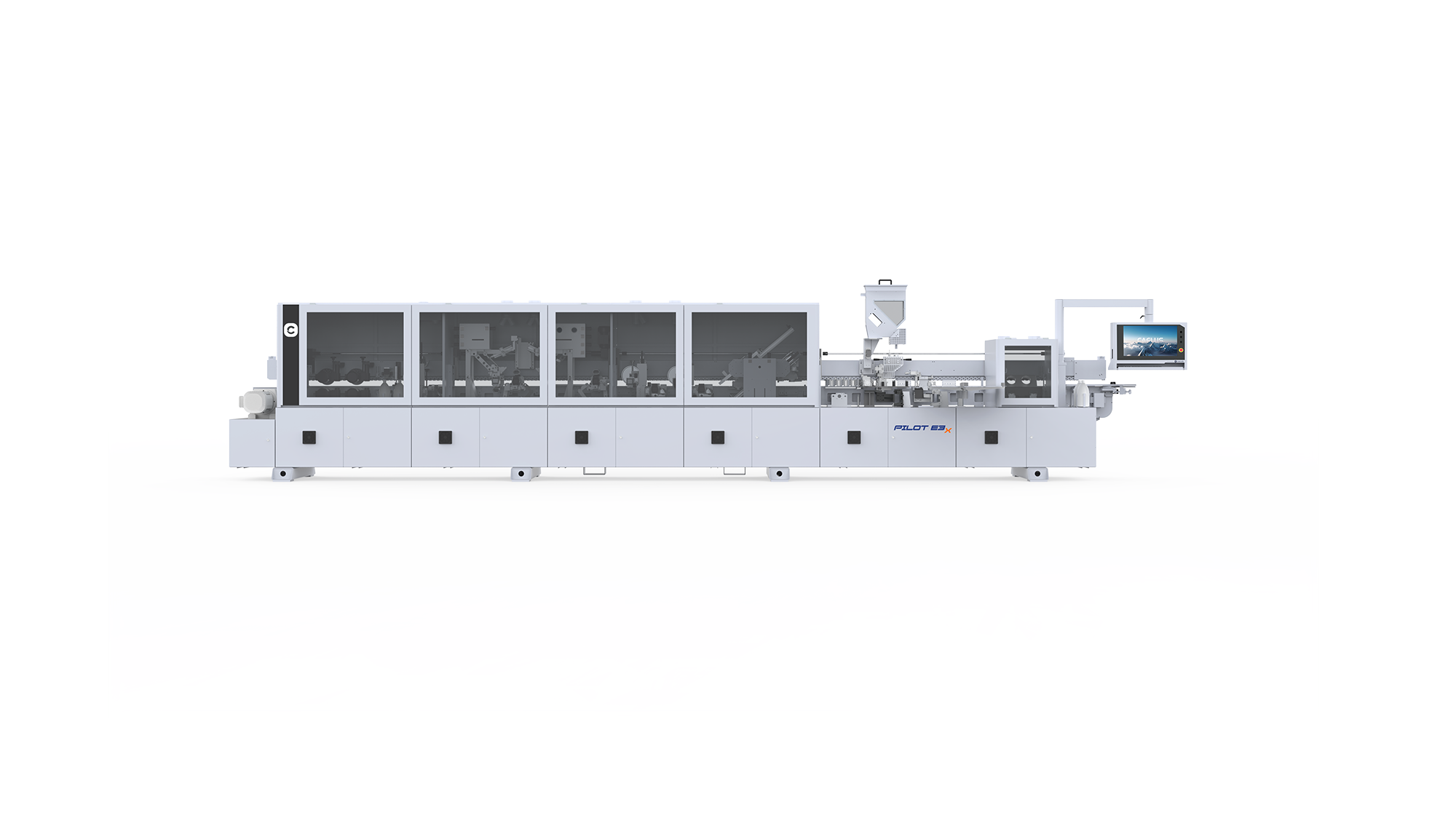
In furniture production, edge quality is often judged by small details: a clean glue line, a smooth corner, and an edge that can withstand daily use. Edge tape thickness has a direct impact on all of these results.
Thin edge tape is suitable for hidden cabinet parts and cost-sensitive panels. Thicker edge tape can create a stronger, rounder, more premium-looking edge, but only when the edge banding machine is properly matched to the material. Pressure, trimming, scraping, polishing, and glue control all need to work together.
Choosing the right edge tape thickness is therefore not only about material cost. It also affects appearance, durability, production efficiency, and machine configuration. Below, we look at how different thicknesses perform and how to match them with the right edge banding process.
What Is Edge Tape Thickness?
Edge tape thickness refers to the thickness of the edge banding material applied to the exposed side of a panel. The panel may be MDF, particleboard, plywood, melamine board, laminate board, or another engineered wood material.
In panel furniture manufacturing, edge banding serves several purposes:
- It covers the exposed core of the board.
- It improves the appearance of the furniture.
- It protects the edge from moisture and impact.
- It reduces chipping and daily wear.
- It helps create a more finished, higher-value product.
Edge tape thickness is different from edge tape width.
Thickness affects durability, appearance, radius, trimming, glue line control, and machine setup.
Width must match the panel thickness, usually with extra allowance for trimming.
For example, an 18mm panel may use an edge tape width slightly wider than 18mm so the machine can trim the top and bottom flush. But whether that tape is 0.4mm, 1mm, or 2mm thick is a separate quality and production decision.
How Edge Tape Thickness Affects Edge Banding Quality
Edge tape thickness has a direct influence on how a finished panel looks, feels, and performs in daily use. Thin tape gives a clean and economical finish. Thicker tape adds protection and a softer edge profile, but it also requires better machine control.
In production, the key is not to choose the thickest tape possible. The better choice is the thickness that fits the furniture application, board quality, adhesive system, and edge banding machine setup.
1. Appearance and Edge Feel
Thin edge tape creates a flat, simple edge. It works well for cabinet interiors, hidden shelves, and panels where cost control matters more than a premium touch.
Thicker tape changes the edge profile. After trimming and scraping, 2mm or 3mm tape can form a smoother radius, making the panel feel stronger and more refined. This is useful for cabinet doors, office desks, hotel furniture, retail counters, and other visible parts.
A practical way to choose is simple: use thin tape where the edge is rarely seen or touched, and use thicker tape where the customer will notice the edge.
2. Durability and Impact Resistance
The thicker the tape, the more protection it gives to the board core.
A 0.4mm tape mainly covers the exposed edge. It is suitable for light-use areas, but it does not provide much protection against knocks or daily wear.
A 1mm or 1.5mm tape is often the safest choice for standard furniture because it improves durability without making production too difficult.
A 2mm or 3mm tape works more like a protective bumper. It is better for high-contact furniture, such as desks, school furniture, laboratory cabinets, worktops, and commercial panels.
3. Board Coverage and Glue Line
Thin tape follows the board edge closely. If the MDF or particle board edge has saw marks, chips, gaps, or uneven areas, these defects may become visible after edge banding.
Thicker tape can hide minor board imperfections better, but it cannot replace good panel preparation. If the board edge is not clean and square, the glue line can still look poor.
For visible panels, pre-milling is often worth the investment. It creates a cleaner bonding surface and helps reduce glue line problems before the tape is applied.
4. Trimming, Scraping, and Corner Quality
Thick tape puts more demand on the edge banding machine.
With thin tape, trimming is easier and the cutting load is lower. With 2mm or 3mm tape, the machine must remove more material and shape a consistent radius. If trimming, scraping, or polishing is not adjusted correctly, defects appear quickly.
Common problems include:
- Rough trimming marks
- Uneven radius
- White stress marks on PVC
- Visible scraper lines
- Poor corner rounding
- Edges that feel sharp or unfinished
This is why buyers should not only ask whether a machine can apply 3mm tape. They should ask whether it can finish 3mm tape cleanly and consistently at production speed.
Quick Comparison
| Thickness Range | Best For | Quality Advantage |
|
| 0.4mm–0.8mm | Cabinet interiors, shelves, light-use panels | Low cost, flexible, clean flush appearance | Lower impact resistance; board defects may show more easily |
| 1mm–1.5mm | Wardrobes, desks, standard furniture | Balanced appearance, durability, and processing cost | Needs accurate trimming and clean glue control |
| 2mm–3mm | Worktops, school furniture, commercial furniture, premium visible edges | Stronger protection, smoother radius, better edge feel | Requires stable pressure, precise trimming, scraping, and polishing |
How Edge Tape Thickness Affects Edge Banding Quality
Edge tape thickness affects the finished edge in four main ways: appearance, durability, glue line control, and machining quality. Thin tape is easier to process and gives a clean, flush look. Thicker tape protects the board better and creates a more premium rounded edge, but it also requires more accurate edge banding machine settings.
1. Appearance: Flat Edge or Rounded Edge
Thin edge tape sits close to the board and creates a simple, flush finish. It works well when the edge is not a major visual detail, such as cabinet interiors or hidden shelves.
Thicker edge tape gives the machine more material to shape. After trimming and scraping, it can form a softer radius. This makes visible edges feel more solid and refined, especially on cabinet doors, office desks, hotel furniture, and retail counters.
Factory note:
If the customer will see or touch the edge every day, a thicker tape often improves perceived quality. If the edge is hidden, thinner tape is usually enough.
2. Durability: Covering the Edge vs. Protecting the Edge
A thin edge band mainly covers the exposed board core. It improves appearance, but it does not add much impact resistance.
A thicker edge band works more like a protective layer. It helps reduce damage from knocks, cleaning, moving, and daily contact. This is why 2mm or 3mm tape is often chosen for worktops, desks, school furniture, laboratory cabinets, and commercial panels.
3. Glue Line: Thickness Helps, But Setup Matters More
Thicker tape can hide small board-edge imperfections better than thin tape. But it will not solve a poor glue line by itself.
A clean seam still depends on:
- A straight and smooth panel edge
- Correct glue amount and temperature
- Stable pressure from the rollers
- Proper feed speed
- Accurate scraping and polishing
If the tape is thick but the pressure is uneven, the glue line may become more obvious. For visible panels, pre-milling is often useful because it creates a cleaner edge before glue is applied.
4. Machining Quality: Thick Tape Tests the Machine
With thin tape, trimming is easier because there is less material to remove. With 2mm or 3mm tape, the machine has to cut, shape, scrape, and polish more material.
If the machine is not adjusted well, thick tape may show:
- Rough trimming marks
- Uneven radius
- White stress marks on PVC
- Visible scraper lines
- Poor corner rounding
- Edges that feel sharp instead of smooth
Practical Takeaway
The best edge tape thickness depends on where the panel will be used.
Use 0.4mm–0.8mm for hidden or light-use edges.
Use 1mm–1.5mm for standard visible furniture edges.
Use 2mm–3mm for premium, high-contact, or commercial furniture.
A thicker edge can improve durability and appearance, but only when the edge banding machine has the right pressure, trimming, scraping, polishing, and glue control. For stable edge banding quality, tape thickness and machine capability should always be chosen together.
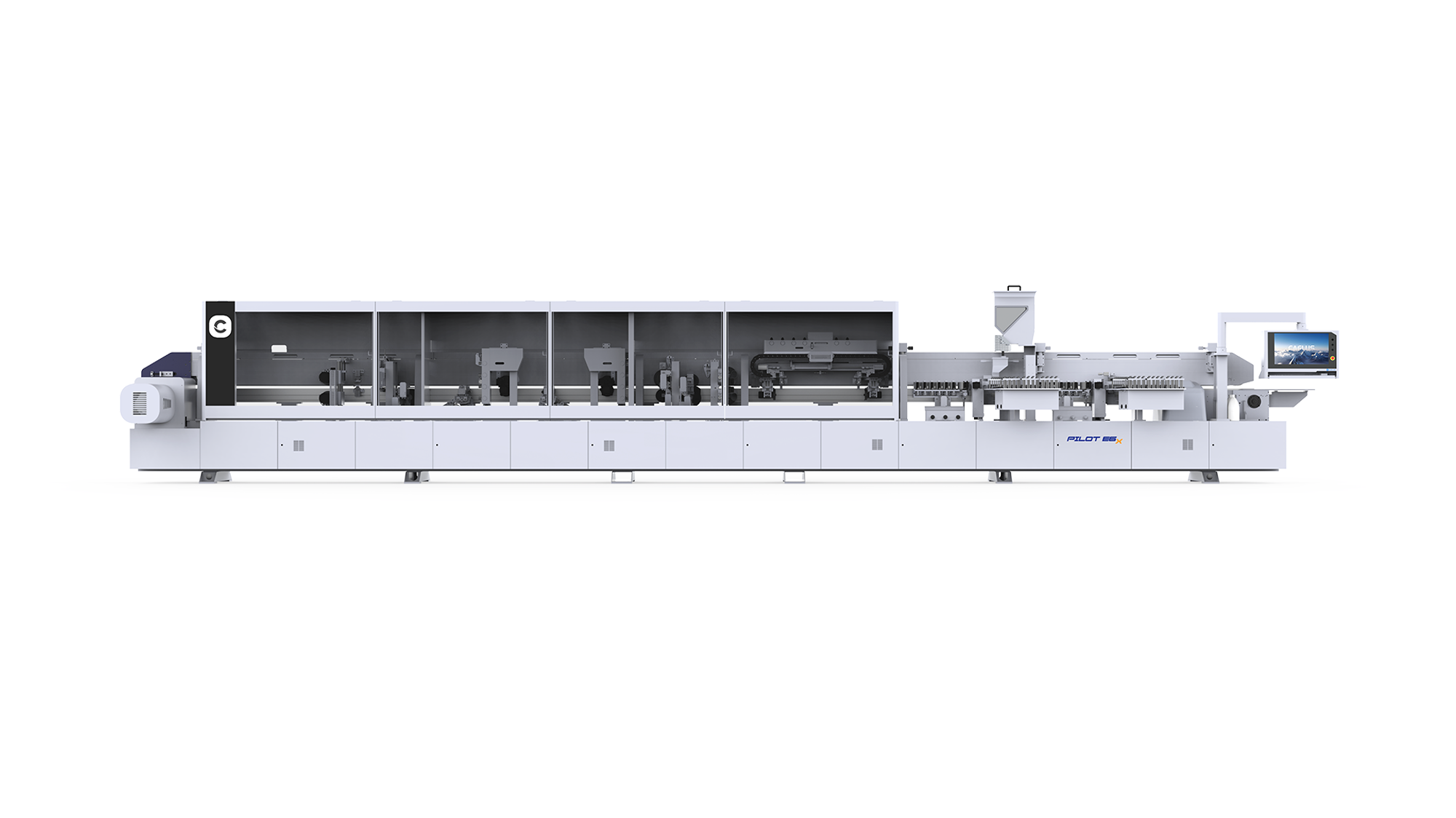
Pilot E6x High Speed Intelligent Servo Edge Banding Machine
What Makes Caelus Edge Banding Machines Suitable for Different Tape Thicknesses?
Caelus edge banding machines are designed for modern panel furniture manufacturers that need stable quality, flexible production, and efficient operation.
For factories working with different edge tape thicknesses, Caelus focuses on several practical areas:
- Heavy-duty frame structure for stable long-term operation
- Servo-controlled feeding and positioning
- Pre-milling for cleaner panel edges
- EVA, PUR, and optional laser edge banding processes
- Stable pressing for reliable bonding
- Intelligent trimming and scraping to reduce manual adjustment
- Polishing and finishing units for smoother final appearance
- Multi-specification edge feeding for flexible production
For example, the Caelus Aurora E8 series is built for high-speed intelligent edge banding. It supports flexible gluing options, servo edge feeding, stable high-speed operation, intelligent pressure adjustment, fine trimming, scraping, and corner rounding.
Common Problems When Edge Tape Thickness Is Chosen Incorrectly
| Problem | Likely Cause | Practical Solution |
| Edge looks cheap | Tape too thin for visible furniture edges | Upgrade to 1mm or 2mm tape |
| Edge chips easily | Tape too thin for high-use furniture | Use 1.5mm–3mm tape |
| Glue line is too visible | Poor edge preparation, glue control, or pressure | Use pre-milling, adjust glue amount and pressure |
| Edge peels off | Weak bonding or incorrect glue temperature | Check adhesive, pressure, and feed speed |
| Rough trimming marks | Thick tape with poor tool setup | Adjust trimming tools and scraper position |
| White stress marks | Excessive cutting or scraping pressure | Use sharper tools and reduce pressure |
| Uneven corner radius | Corner rounding not matched to tape thickness | Recalibrate corner rounding unit |
| High production cost | Tape thicker than necessary | Match thickness to furniture grade |
Conclusion
Edge tape thickness affects more than the look of a panel. Thin tape works well for hidden or low-use edges, while 1–1.5mm gives a balanced finish for standard furniture. For premium or high-contact parts, 2–3mm tape improves impact resistance and edge feel, but only when the edge banding machine has stable pressure, accurate trimming, clean scraping, and proper glue control.
FAQ
Q1. What is the best edge tape thickness for cabinets?
A: For cabinet interiors or hidden edges, 0.4mm–0.8mm is usually enough. For visible cabinet doors or higher-quality furniture, 1mm–2mm often gives a better balance of appearance, protection, and cost.
Q2. Is thicker edge tape always better?
A: No. Thicker edge tape can improve durability and create a more premium rounded edge, but it also needs better machine setup. If pressure, trimming, scraping, or glue control is poor, thick tape may show more defects.
Q3. Does edge tape thickness affect the glue line?
A: Yes, but thickness is only one factor. A clean glue line also depends on panel edge quality, glue amount, glue temperature, feed speed, pressure roller setting, scraping, and polishing.
Q4. Can 0.4mm edge tape be used for furniture?
A: Yes. 0.4mm edge tape is suitable for cabinet interiors, shelves, drawer parts, and low-use panels. It is not the best choice for exposed edges that need stronger impact resistance.
Q5. When should I use 2mm or 3mm edge tape?
A: Use 2mm or 3mm edge tape for premium visible edges, worktops, office desks, school furniture, laboratory cabinets, and commercial furniture where the edge is touched or hit often.