

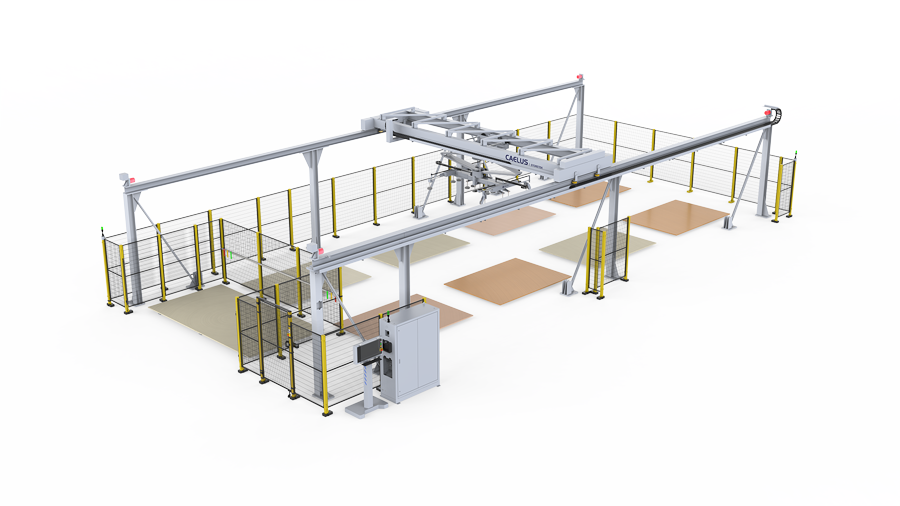
Choosing the right woodworking machine is not just about buying a saw, an edge bander, or a CNC machine. For furniture manufacturers, the real question is how each machine fits into the whole production flow — from panel storage and cutting to edge banding, drilling, sorting, and assembly.
A well-planned woodworking line can help a factory cut panels more accurately, reduce manual handling, improve edge quality, and keep production moving with fewer mistakes. This is especially important for cabinet, wardrobe, office furniture, and custom panel furniture manufacturers, where board sizes, colors, and order requirements often change from job to job.
In this guide, we’ll walk through the main types of woodworking machines, what each machine does, how to compare them, and what buyers should consider before investing in new equipment. If you are planning to upgrade your workshop or build a more automated panel processing line, this article will help you make a clearer decision.
What Is a Woodworking Machine?
A woodworking machine is equipment used to process wood or wood-based panels into finished parts. It can cut, shape, drill, sand, edge, or handle materials such as solid wood, plywood, MDF, particleboard, and laminated boards.
In a workshop, common woodworking machines include table saws, band saws, planers, jointers, routers, drill presses, and sanding machines. In furniture manufacturing, the equipment is usually more production-focused, such as panel saws, edge banding machines, CNC routers, drilling machines, and panel storage systems.
For buyers, the key point is simple: a woodworking machine should help your factory produce parts more accurately, more efficiently, and with less manual work.
What Does a Woodworking Machine Do?
| Main Function | Common Machines | What It Helps With |
|---|---|---|
| Cutting | Panel saw, table saw, band saw | Cuts boards or panels to size |
| Shaping | Router, CNC router | Creates grooves, curves, and profiles |
| Drilling | Drill press, CNC drilling machine | Makes accurate holes for assembly |
| Edge finishing | Edge banding machine | Covers exposed panel edges |
| Sanding | Belt sander, wide belt sander | Smooths surfaces before finishing |
| Material handling | Panel storage system | Stores, sorts, and feeds panels |
In short, woodworking machines are the foundation of modern wood and panel processing. The right machine depends on what you produce, the materials you use, your daily output, and how automated you want your production line to be.
Main Types of Woodworking Machines
Different woodworking machines are designed for different production steps. The right choice depends on your product, material, factory size, automation level, and production goal.
1. Cutting Machines
Cutting is usually the first major step in woodworking. It determines the size, squareness, and quality of the parts that move to edge banding, drilling, assembly, and packaging.
Common cutting machines include:
- Table saws
- Band saws
- Miter saws
- Sliding table saws
- Panel saws
- CNC panel saws
- Beam saws
- CNC routers and nesting machines
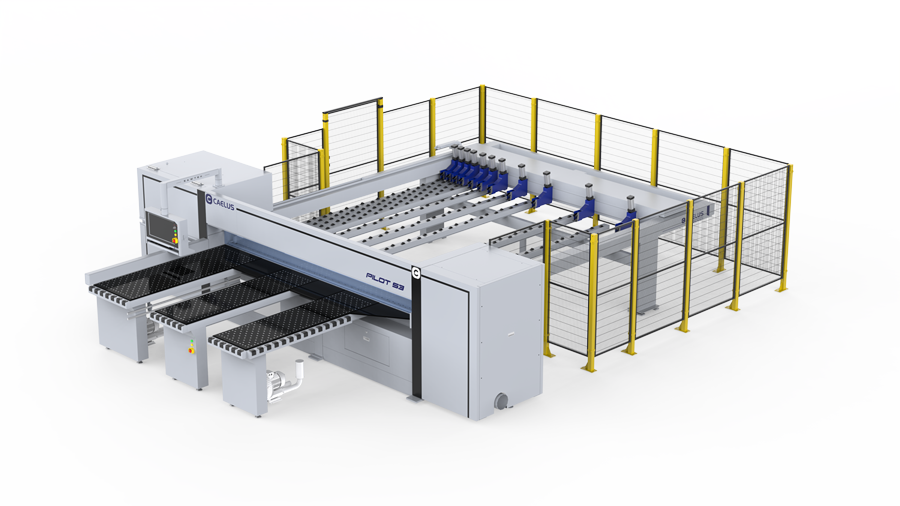
Panel Saws
A panel saw is a woodworking machine used to cut large sheet materials into smaller parts according to a cutting list or production plan. It is widely used in cabinet manufacturing, wardrobe production, office furniture manufacturing, door production, and panel processing.
Common materials cut by panel saws include:
- MDF
- Particleboard
- Plywood
- Chipboard
- Melamine board
- Laminated board
- Veneer panels
- Plastic panels
- Acrylic panels
- Aluminum composite panels, depending on machine configuration
Panel saws are especially important because cutting quality affects every downstream process. If the cut edge is chipped, inaccurate, or not square, edge banding and drilling quality will suffer.
Best for: panel furniture, cabinets, wardrobes, office furniture, high-volume panel processing
Buyer priorities: cutting accuracy, saw power, feeding speed, clamping stability, optimization software, automatic loading, dust collection, safety protection
2. Edge Banding Machines
An edge banding machine applies edge banding tape to the exposed edges of cut panels. This is essential for MDF, particleboard, plywood, melamine, and laminated panels because raw edges are usually rough, unattractive, and easy to damage.
Edge banding improves:
- Appearance
- Moisture resistance
- Edge durability
- Touch quality
- Product value
- Customer satisfaction
A modern automatic edge banding machine may include:
- Pre-milling
- Gluing
- Edge tape feeding
- Pressing
- End trimming
- Rough trimming
- Fine trimming
- Corner rounding
- Scraping
- Buffing and polishing
Common edge materials include PVC, ABS, PP, melamine, veneer, and solid wood strips.
Best for: cabinets, wardrobes, office furniture, kitchen furniture, panel furniture
Buyer priorities: feeding speed, glue system, edge thickness range, panel thickness range, trimming quality, PUR/EVA compatibility, corner rounding, cleaning convenience

3. Panel Storage Systems
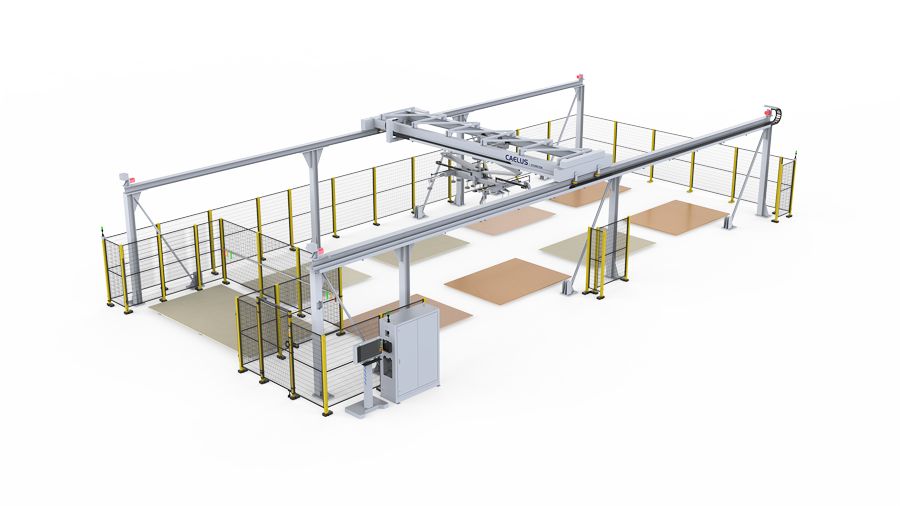
A panel storage system is an automated or semi-automated system used to store, sort, retrieve, and feed panels to cutting machines or other production equipment.
Many people think a panel storage system is simply an automated rack. In modern furniture manufacturing, it is much more than that. It can become the material flow center of a panel processing workshop.
A panel storage system can help factories:
- Reduce manual panel handling
- Reduce board scratches and damage
- Shorten panel searching time
- Improve saw utilization
- Organize different colors, sizes, and materials
- Support mixed-order and customized production
- Connect storage, cutting, labeling, and production scheduling
- Improve factory space usage
When connected with a panel saw, the storage system can automatically retrieve the right board according to the cutting plan, send it to the saw, and reduce waiting time between jobs.
Best for: custom furniture factories, large panel processing plants, multi-color board inventory, high-mix production
Buyer priorities: storage capacity, panel size range, panel weight, sorting logic, suction system, saw integration, software compatibility, safety fencing, layout requirements
4. CNC Routers and Nesting Machines
A CNC router is a computer-controlled woodworking machine used for cutting, grooving, drilling, engraving, profiling, and shaping. A nesting machine is often used to optimize panel layout and cut parts from full sheets with high material utilization.
CNC routers are suitable for:
- Shaped panels
- Custom parts
- Grooves
- Holes
- Decorative patterns
- Door panels
- Furniture components
- Interior decoration parts
Compared with a panel saw, a CNC nesting machine offers more flexibility for complex shapes, while a panel saw is often faster and more efficient for straight cutting of rectangular parts.
5. Drilling and Boring Machines
Drilling machines create accurate holes for hardware, connectors, hinges, drawer slides, shelves, and assembly fittings.
Common drilling equipment includes:
- Drill press
- Multi-boring machine
- Hinge boring machine
- CNC drilling machine
- Six-sided drilling machine
For panel furniture, drilling accuracy is critical. A small hole-position error can cause assembly problems, poor alignment, and customer complaints.
Best for: cabinets, wardrobes, office furniture, panel assembly
Buyer priorities: hole accuracy, drilling speed, number of drilling heads, software compatibility, barcode reading, automatic loading/unloading
6. Planers and Jointers
Planers and jointers are commonly used in solid wood processing.
A jointer creates one flat surface and one straight edge on rough lumber. A planer reduces wood to a consistent thickness. These machines are essential when working with raw solid wood that may be warped, twisted, or uneven.
Best for: solid wood furniture, doors, stairs, tabletops, millwork
Buyer priorities: cutting width, feed speed, cutterhead quality, surface finish, dust collection, safety protection
7. Band Saws and Miter Saws
A band saw uses a continuous toothed blade to cut curves, irregular shapes, and thick material. A miter saw is used for accurate angled cuts, crosscuts, and bevel cuts.
These machines are common in workshops, millwork shops, trim production, and solid wood processing.
Best for: curved cuts, trim, framing, solid wood parts
Buyer priorities: blade stability, cutting capacity, angle accuracy, operator safety
8. Sanding and Finishing Machines
Sanding machines smooth the wood surface before painting, coating, laminating, or assembly.
Common sanding equipment includes:
- Belt sanders
- Wide belt sanding machines
- Drum sanders
- Disc sanders
- Brush sanding machines
- Profile sanding machines
In industrial production, sanding affects surface quality, coating adhesion, and final appearance.
Best for: solid wood, veneer panels, doors, painted panels, surface finishing
Buyer priorities: sanding width, belt speed, pressure control, dust collection, finish consistency
How Panel Saws, Edge Banding Machines, and Panel Storage Systems Work Together
For panel furniture manufacturers, the most important machines are often not isolated machines. They work together as a complete panel processing workflow.
1. Panel Storage and Material Preparation
The panel storage system stores boards by type, size, color, thickness, and production priority. When an order enters production, the system can retrieve the correct panel and send it to the cutting area.
This reduces manual searching, forklift movement, waiting time, and board damage.
2. Precision Cutting with Panel Saws
The panel saw cuts raw boards into cabinet parts, wardrobe parts, shelves, side panels, door panels, and other components. Accurate cutting ensures that the parts are square, consistent, and ready for downstream processing.
Good cutting quality reduces:
- Chipped edges
- Size errors
- Edge banding problems
- Drilling misalignment
- Assembly gaps
- Rework
3. Edge Finishing with Edge Banding Machines
After cutting, exposed edges are sealed with edge banding tape. A high-quality edge banding machine improves durability, protects the panel core, and creates a clean finished appearance.
For kitchen cabinets, bathroom cabinets, wardrobes, and office furniture, edge quality is a major factor in product value.
4. Labeling, Sorting, and Data Flow
In customized furniture production, each panel may have different dimensions, edge banding requirements, drilling positions, and assembly destinations.
Barcode labels help operators identify:
- Which order the panel belongs to
- Which edges need banding
- Which tape color to use
- Which machine or process comes next
- Where the part should go after processing
When cutting, storage, edge banding, drilling, and sorting use the same production data, factories can reduce wrong parts, missing parts, and unnecessary rework.
How to Choose the Right Woodworking Machine
Choosing a woodworking machine should start with your production goal, not with the machine price alone.
1. Define Your Product Type
- Do you mainly produce cabinets, wardrobes, office furniture, doors, flooring, or solid wood furniture?
- Are your products mostly panel-based or solid wood?
- Do you produce standard batches or customized orders?
- Do you process many colors, thicknesses, and board types?
For panel furniture, the core equipment usually includes panel saws, edge banding machines, drilling machines, and panel storage systems. For solid wood furniture, planers, jointers, band saws, sanders, and moulders may be more important.
2. Identify Your Current Bottleneck
A factory should not upgrade blindly. Find the bottleneck first.
Common bottlenecks include:
- Workers spend too much time finding boards
- Cutting speed cannot meet order demand
- Edge banding quality is unstable
- Operators make frequent measuring mistakes
- Finished parts are scratched during handling
- Drilling positions are inconsistent
- Custom orders are hard to track
- Factory space is poorly used
If the bottleneck is cutting, upgrade the panel saw. If the bottleneck is board handling, consider a panel storage system. If finished quality is the issue, evaluate the edge banding machine and cutting accuracy together.
3. Choose by Production Scale
| Factory Type | Recommended Equipment |
| Small workshop | Sliding table saw, semi-automatic edge bander, basic drilling machine |
| Growing cabinet factory | CNC panel saw, automatic edge banding machine, labeling system |
| Custom furniture factory | Panel storage system, automatic panel saw, automatic edge bander, drilling machine |
| Large furniture manufacturer | Automated storage, panel cutting cell, edge banding line, drilling line, MES/ERP connection |
| Solid wood workshop | Jointer, planer, band saw, sander, router, dust collection system |
4. Choose by Material
| Material | Recommended Machines |
| MDF | Panel saw, edge banding machine, drilling machine |
| Particleboard | Panel saw, edge bander, panel storage system |
| Plywood | Panel saw, CNC router, sanding machine |
| Melamine board | High-precision panel saw, edge bander |
| Laminated board | Scoring saw, clean cutting, high-quality edge banding |
| Solid wood | Planer, jointer, band saw, sander, moulder |
| Veneer panel | Panel saw, sanding machine, careful handling system |
5. Evaluate Automation Level
| Automation Level | Suitable For | Advantages |
| Manual | Small shops, low budget | Low initial investment |
| Semi-automatic | Growing workshops | Better efficiency and consistency |
| Fully automatic | Medium and large factories | Higher output, fewer manual errors |
| Integrated smart line | Custom furniture and industrial plants | Connected data, faster flow, scalable automation |
How Caelus Helps Furniture Manufacturers Build Smarter Woodworking Production
Caelus focuses on intelligent panel processing equipment for modern furniture manufacturing. Our solutions are designed to help factories improve cutting accuracy, edge quality, material handling, and production flow.
Caelus solutions include:
- Panel saws for accurate and efficient panel cutting
- Edge banding machines for stable and high-quality edge finishing
- Panel storage systems for intelligent board storage, sorting, and feeding
- Automated furniture manufacturing solutions for connected panel processing workflows
For furniture manufacturers, the value is not only in buying a single machine. The bigger value is building a coordinated workflow from panel storage to cutting, edge banding, drilling, and final assembly.
A suitable Caelus solution can help your factory:
- Reduce manual handling
- Improve panel cutting accuracy
- Reduce edge banding defects
- Improve machine utilization
- Support customized furniture production
- Reduce rework and material waste
- Improve production consistency
- Prepare for future smart factory upgrades
Conclusion
Woodworking machines are the foundation of efficient furniture production. From panel saws and edge banding machines to CNC routers, drilling machines, sanders, and panel storage systems, each machine supports a key step from raw boards to finished parts. The right choice depends on material, product type, factory size, output target, and automation needs. For panel furniture makers, connecting storage, cutting, edging, drilling, and sorting improves quality, cuts labor, and keeps output moving.
FAQ
Q1. What is a woodworking machine used for?
A: A woodworking machine is used to cut, shape, drill, sand, edge, or handle wood and wood-based panels. In furniture manufacturing, it helps turn raw boards into accurate parts for cabinets, wardrobes, office furniture, doors, and other products.
Q2. What are the main types of woodworking machines?
A: The main types include cutting machines, panel saws, edge banding machines, CNC routers, drilling machines, planers, jointers, band saws, sanding machines, and panel storage systems. Each machine is designed for a different production step.
Q3. What is the most important woodworking machine for panel furniture production?
A: For panel furniture production, the most important machines are usually panel saws, edge banding machines, drilling machines, and panel storage systems. Together, they support cutting, edge finishing, assembly preparation, and material handling.
Q4. How do I choose the right woodworking machine?
A: Start with your product type, material, daily output, factory space, and current production bottleneck. If cutting is slow, consider a panel saw. If edge quality is unstable, check the edge banding machine. If material handling wastes time, a panel storage system may help.