

In modern furniture manufacturing, fine details decide market competitiveness. Premium cabinets feature smooth, seamless edges with no exposed substrate, all achieved via professional edge banding technology.
Edge banding not only hides surface flaws but also protects wood panels effectively. Poor edge sealing causes moisture absorption, panel expansion, cracking and excessive formaldehyde release. With growing processing automation, standard edge banding has become essential for mass furniture production.
This article elaborates on three mainstream furniture edge banding types and how high-performance edge banding machines deliver superior sealing quality.
What Is Edge Banding?

Edge banding refers to the process of applying narrow strips of material to the exposed edges of a panel. To industrialize this process, factories typically rely on edge banding machines.
A modern automatic edge banding machine is a sophisticated, integrated unit. A typical workflow includes the following stages:
• Pre-milling: Correcting saw marks left over from the initial cutting process.
• Bonding: Pressing and adhering the edge banding strip to the panel using hot-melt adhesive (EVA/PUR).
• Edge Cutting: Rapidly trimming away excess material from the leading and trailing ends, as well as the top and bottom edges.
• Edge Polishing: Removing residual adhesive to ensure the edge is smooth, rounded, and lustrous.
An Analysis of the Three Common Types of Edge Banding
Based on material characteristics and application scenarios, the industry generally categorizes edge banding into the following three main types:
PVC / ABS Edge Banding (Plastic Edge Banding)
This is currently the most widely utilized type of edge banding in furniture manufacturing.
Characteristics: Highly competitive in terms of cost; offers excellent flexibility; can be molded to replicate various wood grain patterns or solid colors.
Advantages: Extremely abrasion-resistant and easy to process, making it the "perfect partner" for automatic edge banding machines.
Applications: Widely used in large-scale panel processing operations, modern office furniture production, and integrated cabinetry systems.
Wood Veneer Edge Banding
This constitutes the very soul of high-end furniture and solid wood veneered cabinetry.
Features: Sliced directly from natural timber, it possesses inimitable wood grain patterns and a distinct tactile quality.
Advantages: Offers exceptional texture and can be subsequently painted or stained, thereby endowing engineered wood panels with the visual aesthetics of solid wood.
Processing Requirements: Demands extremely high precision in machine trimming operations, as well as meticulous edge polishing to prevent the formation of wood burrs along the edges.
Melamine Edge Banding
This is a paper-based edge banding strip, typically treated through a resin impregnation process.
Features: Offers the lowest cost point, with colors and textures that can achieve a high degree of consistency with the decorative panel surface.
Advantages: Highly suitable for rapid production environments and exhibits excellent color stability.
Limitations: Characterized by high brittleness and lower durability; furthermore, it cannot replicate the smooth, rounded chamfered effect achievable with thicker edge banding materials.
Processing Differences Among Various Edge Banding Types
To assist you in making an informed decision, we have compared these three materials across key production dimensions:
Table 1: Comparison of Edge Banding Materials
|
Feature |
PVC / ABS |
Wood Veneer |
Melamine |
|
Cost |
Low to Medium |
High |
Very Low |
|
Appearance |
Good / Modern |
Premium / Natural |
Fair / Matches Board |
|
Durability |
Excellent |
Moderate |
Low |
|
Automation |
Highly Compatible |
Requires Precision |
High |
|
Surface Finish |
Various Textures |
Paintable |
Matte / Printed |
Note: The choice of material directly impacts the difficulty of the edge cutting (trimming) process, as well as the specific types of consumables required for edge polishing.
Detailed Overview of the Edge Banding Process
High-quality edge banding is inextricably linked to a rigorous and precise process workflow. Within Caelus's highly efficient edge banding systems, this workflow has been optimized to the absolute limit:
1. Loading & Positioning: The panel enters the conveyor system, where a pressure beam ensures it remains firmly in place—preventing any displacement—even during high-speed transit.
2. Glue Application & Banding: An intelligent glue application system precisely controls the adhesive output, ensuring uniform coverage and a consistent bond. Caelus equipment supports PUR technology, enabling the achievement of a virtually "invisible glue line" effect.
3. Edge Cutting (Trimming): This stage encompasses end trimming, rough trimming, and fine trimming. It is a critical step that determines whether the edge banding strip sits perfectly flush with the panel surface.
4. Edge Polishing: This constitutes the final step in the process. Utilizing high-speed rotating cloth wheels, this stage enhances the surface smoothness of the edge banding, thereby elevating its overall visual aesthetic.
The Role of Edge Banding Machines Across Different Types
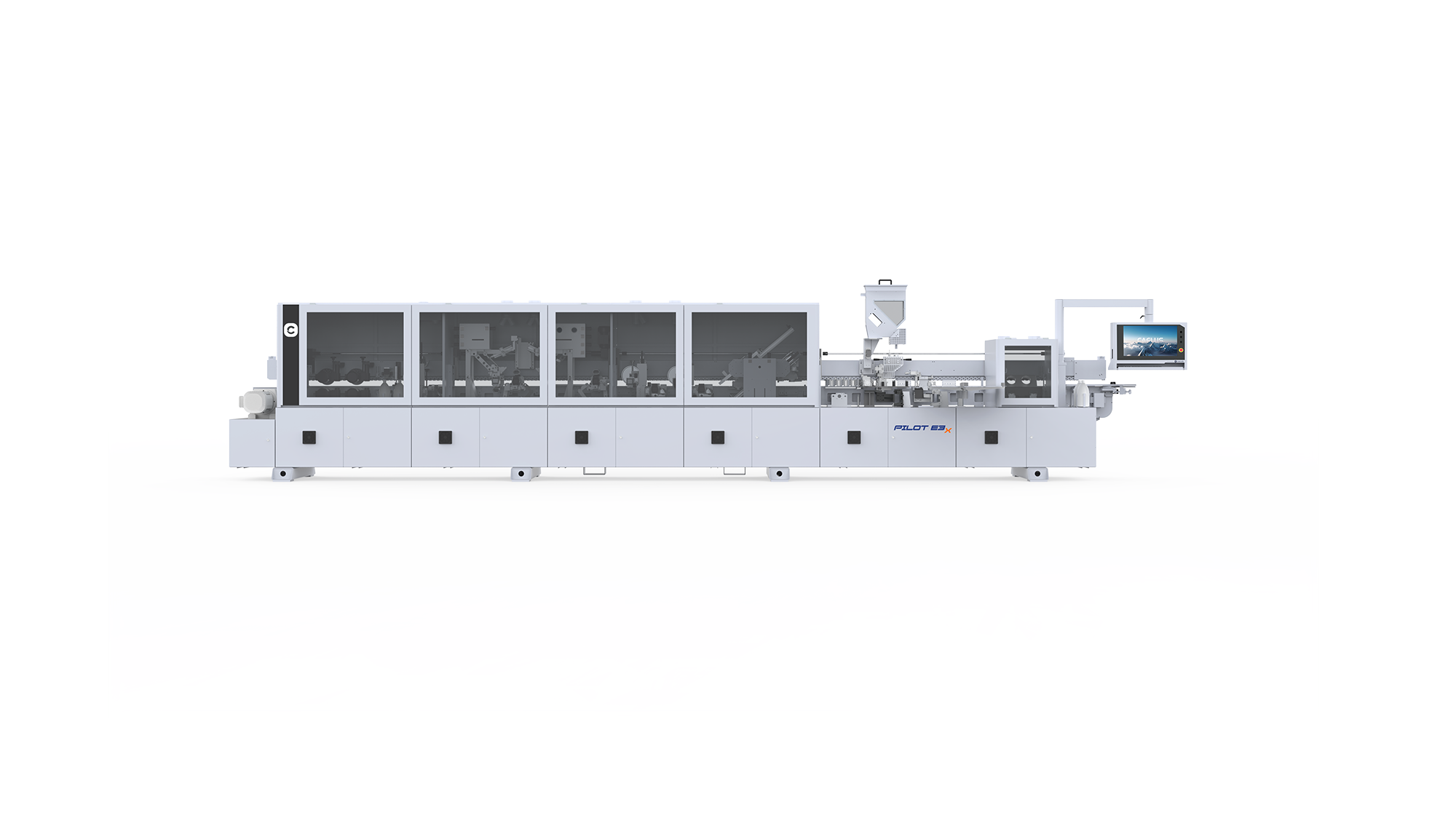
Regardless of the material chosen, the equipment always serves as the foundation for quality.
• Semi vs. Automatic Edge Banding Machines: Semi-automatic models are suitable for irregularly shaped workpieces and extremely small production batches; however, for modern manufacturing facilities, the automatic edge banding machine reigns supreme in terms of efficiency.
• The Caelus Intelligent Advantage: Edge banding machines developed by Caelus (such as the Aurora series) boast exceptional consistency. Whether processing extremely hard ABS or delicate wood veneers, their servo-controlled trimming modules ensure that the edge-cutting action is flawlessly smooth and precise.
• Stability: High-quality edge banders utilize precise temperature control to prevent glue carbonization, thereby eliminating issues related to edge banding detachment.
Table 2: Machine Capabilities for Different Materials
|
Material |
Feeding Speed (m/min) |
Scraper Unit Needed |
Buffing Performance |
|
PVC (2mm) |
20 - 42 |
Mandatory |
High Gloss |
|
Veneer |
12 - 18 |
Optional |
Natural Matte |
|
Melamine |
18 - 25 |
Standard |
Uniform Finish |
How to Choose the Right Type of Edge Banding?
The choice of edge banding type depends on your product positioning and production budget:
1. Based on Product Positioning
High-end Custom Furniture: Wood veneer edge banding is recommended to accentuate a natural aesthetic.
Modern, High-Traffic Furniture (e.g., laboratory or office furniture): ABS is recommended due to its exceptional impact resistance.
2. Based on Production Scale
In large-scale, automated panel processing operations, PVC and ABS remain the mainstream choices, as their inherent stability makes them the easiest materials for automatic edge banding machines to process reliably.
3. Based on Equipment Capabilities
If your factory is equipped with a high-end edge banding line from Caelus, you can confidently experiment with a wide variety of thick edge banding materials; the powerful edge polishing capabilities of Caelus equipment ensure that any material is finished to a silky-smooth perfection.
FAQ
Q1: What are the most common edge banding materials used in furniture manufacturing?
A: PVC and ABS plastic edge banding are currently the most widely used types, as they strike the optimal balance between durability, cost-effectiveness, and ease of automated processing.
Q2: Why is edge polishing so important?
A: Polishing serves a purpose beyond merely removing excess glue residue; it also rectifies the slight "whitening" effect that can occur during the trimming process. This ensures that the color of the edge banding strip remains consistent with the surface of the workpiece, thereby elevating the overall quality and aesthetic appeal of the finished product.
Q3: What causes uneven edge cutting?
Answer: This is typically due to a worn saw blade or insufficient pressure from the machine's pressure beam. By using Caelus’s high-precision edge banding machines, the integrated servo tracking system effectively prevents such issues.
Q4: Can wood veneer edge banding be used on fully automatic edge banding machines?
Answer: Absolutely. However, the machine requires more precise control over glue application volume and multiple polishing units to prevent the wood edges from chipping or splintering.
Conclusion
By understanding these three primary types of edge banding and their respective roles in furniture manufacturing, you hold the key to ensuring product quality. Whether you opt for economical melamine, durable and versatile PVC/ABS, or luxurious and rustic wood veneer, their final aesthetic and performance depend heavily on the specific automatic edge banding machine you choose.
In an era where efficiency reigns supreme, Caelus offers more than just an edge bander; we provide a comprehensive, intelligent panel processing solution—from initial panel cutting all the way to the finished product. By selecting the right processes and equipment, you can ensure that the edge of every panel becomes a distinct asset that enhances your brand's value.