

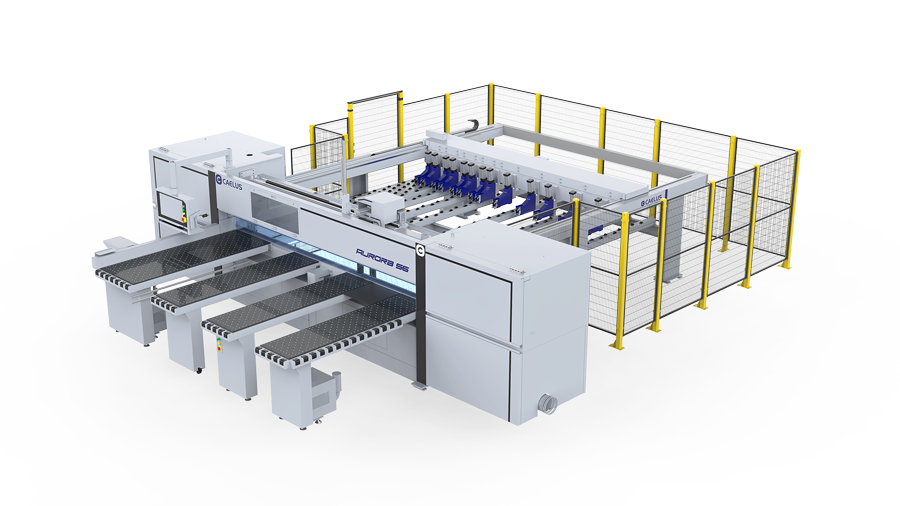
In cabinet manufacturing, fine finished quality originates from cutting and edge banding instead of final assembly.
Panel saws and edge banders are core equipment in cabinet board processing. The saw ensures precise, square and efficient cutting; the edge bander delivers standard edge sealing, protection and surface finishing.
Perfect coordination between the two devices streamlines production and stabilizes output. Mismatched operation leads to dimension errors, weak edge adhesion, obvious glue lines, frequent rework, low efficiency and rising labor expenses.
Why Panel Saw and Edge Bander Are a Core Combination in Cabinet Manufacturing
Cabinet production is a process of turning large sheets into accurately sized, finished and assembly-ready components.
A typical cabinet may include:
- Side panels
- Top and bottom panels
- Shelves
- Drawer parts
- Door panels
- Back panels
- Decorative panels
- Partition boards
Most cabinet components are cut from MDF, particle board, plywood, veneered and melamine boards, with exposed edges requiring professional edge banding treatment.
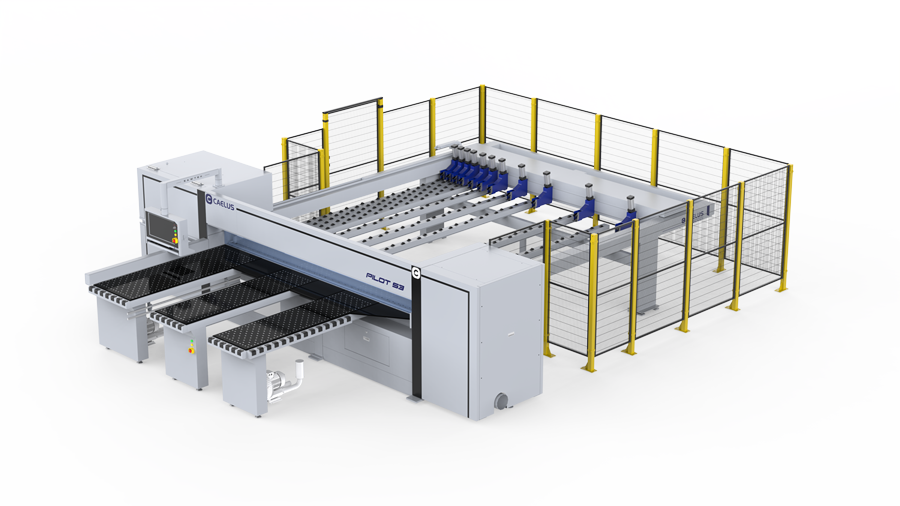
Panel saws and edge banders serve as essential matched equipment.Panel saws ensure accurate dimension and superior cutting quality, while edge banders realize edge protection and fine surface finishing. Unstable cutting undermines edge banding performance, and defective edge sealing will make precisely cut panels fail final quality standards.
What Is a Panel Saw in Cabinet Production?
A panel saw is a machine used to cut large panels into smaller cabinet parts according to a cutting list or production plan.
In modern furniture manufacturing, panel saws are no longer just basic cutting tools. They are often integrated with optimization software, automatic feeding, labeling systems, automatic storage and downstream machines.
Main Functions of a Panel Saw
In cabinet production, a panel saw is mainly used for:
- Cutting large boards into cabinet parts
- Maintaining accurate length and width
- Reducing material waste through optimized cutting
- Improving cutting speed and batch consistency
- Preparing panels for edge banding, drilling and assembly
- Supporting customized and mixed-order production
For a cabinet factory, cutting accuracy is not a small technical detail. It directly affects edge banding, drilling alignment, assembly gaps and the final appearance of the cabinet.
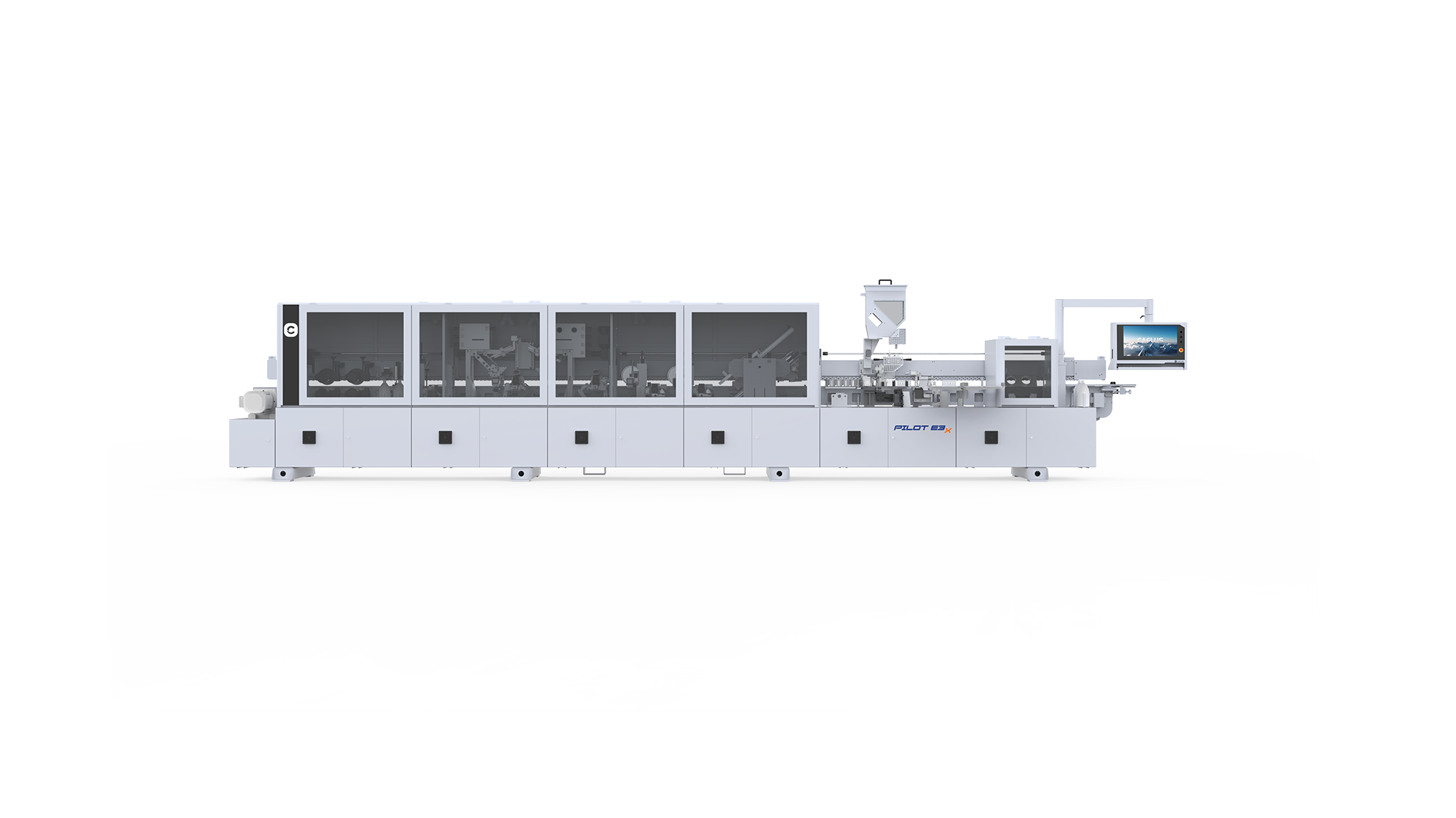
What Is an Edge Bander in Cabinet Production?
Edge banders seal exposed edges of cut cabinet panels. Common raw materials include MDF, particle board, plywood, melamine and laminated boards. Unsealed raw edges appear coarse, absorb moisture and get chipped easily, greatly reducing cabinet overall quality.
It attaches PVC, ABS, PP, melamine, veneer and solid wood edge bands via gluing, pressing, trimming and polishing to form smooth, neat and long-lasting edge finishes.
For cabinet makers, edge banding machines do more than edge covering. They directly determine product outlook, edge durability, production efficiency and end-user satisfaction.
Why Do Cabinet Panels Need Edge Banding?
Cabinet panels need edge banding because exposed board edges are easy to damage and often look unfinished. This is especially important for visible parts such as doors, drawer fronts, shelves and side panels.
Good edge banding helps:
- Improve cabinet appearance
- Protect the panel from moisture and wear
- Reduce chipping
- Create a smoother touch
- Increase product value
- Make finished cabinets look more professional
How Panel Saw and Edge Bander Work Together: The Complete Workflow
In cabinet production, the panel saw and edge bander are closely connected. The panel saw cuts the board into accurate cabinet parts, while the edge bander seals and finishes the exposed edges. When both machines are planned as one workflow, factories can reduce errors, improve edge quality and keep production moving smoothly.
A typical cabinet production workflow includes five main steps.
1. Prepare the Cutting List
Before cutting starts, the factory needs a clear cutting list. This list tells the operator or software what parts need to be made and how each part should be processed.
A good cutting list usually includes:
- Part name and quantity
- Panel length and width
- Board material and thickness
- Edge banding direction
- Edge tape color and thickness
- Order number or barcode
- Next production step
This information is important because cutting and edge banding must follow the same data. If the edge banding direction is wrong, the panel may need to be reworked even if the cutting size is correct.
For customized cabinet production, barcode labels are especially useful. They help operators know which edge should be banded, what tape should be used and where the panel should go next.
2. Cut Panels to the Required Size
After the cutting list is prepared, the panel saw cuts large boards into cabinet parts such as side panels, shelves, doors, drawer fronts and partitions.
At this stage, the key goals are:
- Accurate length and width
- Straight cutting edge
- Clean surface without heavy chipping
- Consistent size between parts
- Correct labeling after cutting
Cutting quality has a direct impact on edge banding. If the panel edge is chipped, uneven or not square, the edge bander may have difficulty producing a clean glue line and smooth finish.
This is why a panel saw is not only a cutting machine. It is the first step in creating a high-quality finished cabinet part.
3. Sort Panels Before Edge Banding
Once panels are cut, they should be sorted before entering the edge bander. This step is simple but very important.
Panels can be sorted by:
- Order
- Panel size
- Edge tape color
- Edge tape thickness
- Number of edges to be banded
- Processing sequence
Good sorting helps avoid wrong edge banding, repeated handling and production delays. It also makes the edge banding process faster and easier for operators.
For example, panels using the same edge tape color can be grouped together. This reduces frequent tape changes and improves machine efficiency.
4. Apply Edge Banding
After sorting, panels enter the edge bander. The machine applies edge tape to the exposed board edge and finishes it through several steps.
A typical automatic edge banding process may include:
Feeding → Pre-milling → Gluing → Pressing → End Trimming → Top and Bottom Trimming → Scraping → Buffing
The exact process depends on the machine configuration.
For standard cabinet parts, basic gluing and trimming may be enough. For visible parts such as doors, drawer fronts and open shelves, additional functions like pre-milling, scraping, buffing and corner rounding can improve the final edge quality.
A good edge banding result should have:
- Strong bonding
- Clean glue line
- Smooth trimming
- No loose tape
- No obvious glue residue
- Comfortable touch
- Consistent appearance
5. Inspect Panels Before Drilling and Assembly
After edge banding, the panels are usually sent to drilling, routing, assembly or packaging. Before moving to the next step, operators should check the edge quality and panel accuracy.
Key inspection points include:
- Is the correct edge banded?
- Is the edge tape firmly attached?
- Is the glue line clean?
- Is the trimming smooth?
- Are the corners properly finished?
- Is the panel size still accurate?
- Are there scratches, chips or over-trimming?
This inspection helps stop small problems before they affect the entire cabinet. A defective panel found before assembly is much easier and cheaper to fix than a finished cabinet with visible edge problems.
Why This Workflow Matters
The panel saw and edge bander should not be treated as two separate machines. In real cabinet production, they work as one connected process.
If the panel saw cuts accurately, the edge bander can produce cleaner and more stable edges. If the edge bander is well matched to the cutting process, the factory can reduce rework, save labor and improve product consistency.
For cabinet manufacturers, the goal is not just to cut panels and cover edges. The real goal is to create a smooth workflow from raw board to finished cabinet part.
A well-planned panel saw and edge bander workflow can help factories:
- Improve production efficiency
- Reduce material waste
- Lower rework rates
- Improve edge quality
- Reduce operator mistakes
- Support customized cabinet orders
- Prepare panels better for drilling and assembly
In short, the panel saw prepares the panel. The edge bander finishes the edge. Together, they form the foundation of efficient cabinet production.
How Caelus Helps Cabinet Manufacturers Build a Better Panel Processing Workflow
Caelus focuses on intelligent panel processing equipment for furniture manufacturing, including panel saws, edge banders, automatic panel storage systems and automated furniture manufacturing solutions.
For cabinet producers, the value is not only in buying one machine. The bigger value is building a coordinated workflow from panel handling to cutting, edge banding and downstream processing.
A suitable Caelus solution can help manufacturers:
- Improve cutting accuracy
- Reduce manual handling
- Improve edge banding consistency
- Support mixed-order and customized production
- Improve material utilization
- Reduce rework
- Connect panel saws, edge banders and storage systems
- Prepare for future automation upgrades
Whether the factory is upgrading from manual cutting or planning a more automated panel processing line, the key is to choose machines that work together — not machines that only perform well separately.
Conclusion
In cabinet manufacturing, panel saws and edge banders form a complete production workflow. Panel saws cut raw boards into standard cabinet parts, and edge banders finish and seal board edges.
Unified cutting data, labeling, sorting and edge banding processes effectively cut rework, upgrade edge quality, save labor costs and stabilize production. Well-matched equipment combinations boost precision and efficiency from raw panel processing to finished assembly parts.
FAQ
Q1. Why does edge banding quality depend on panel saw cutting accuracy?
A: Because the edge bander works on the surface created by the panel saw. If the cut edge is chipped, uneven or not square, the edge bander may produce visible glue lines, poor bonding or rough trimming.
Q2. How can cabinet factories reduce rework in cutting and edge banding?
A: Factories can reduce rework by using accurate cutting lists, barcode labels, proper panel sorting, stable cutting accuracy and consistent edge bander settings.
Q3. What causes visible glue lines after edge banding?
A: Common causes include uneven panel edges, incorrect glue temperature, poor pressure setting, unsuitable edge tape, dirty panel edges or unstable feeding speed.
Q4. Should a cabinet factory buy the panel saw and edge bander together?
A: If possible, yes. Planning them together helps match cutting capacity, edge banding speed, panel size range, workflow layout and future automation needs.
Q5. What is the biggest mistake when choosing a panel saw and edge bander?
A: The biggest mistake is buying machines separately based only on price or speed, without considering the full production workflow, material handling, sorting and downstream processes.
Q6. How does barcode labeling help cabinet production?
A: Barcode labeling helps operators identify each panel, required edge banding direction, edge tape color, order number and next processing step. This reduces mistakes and improves production flow.