

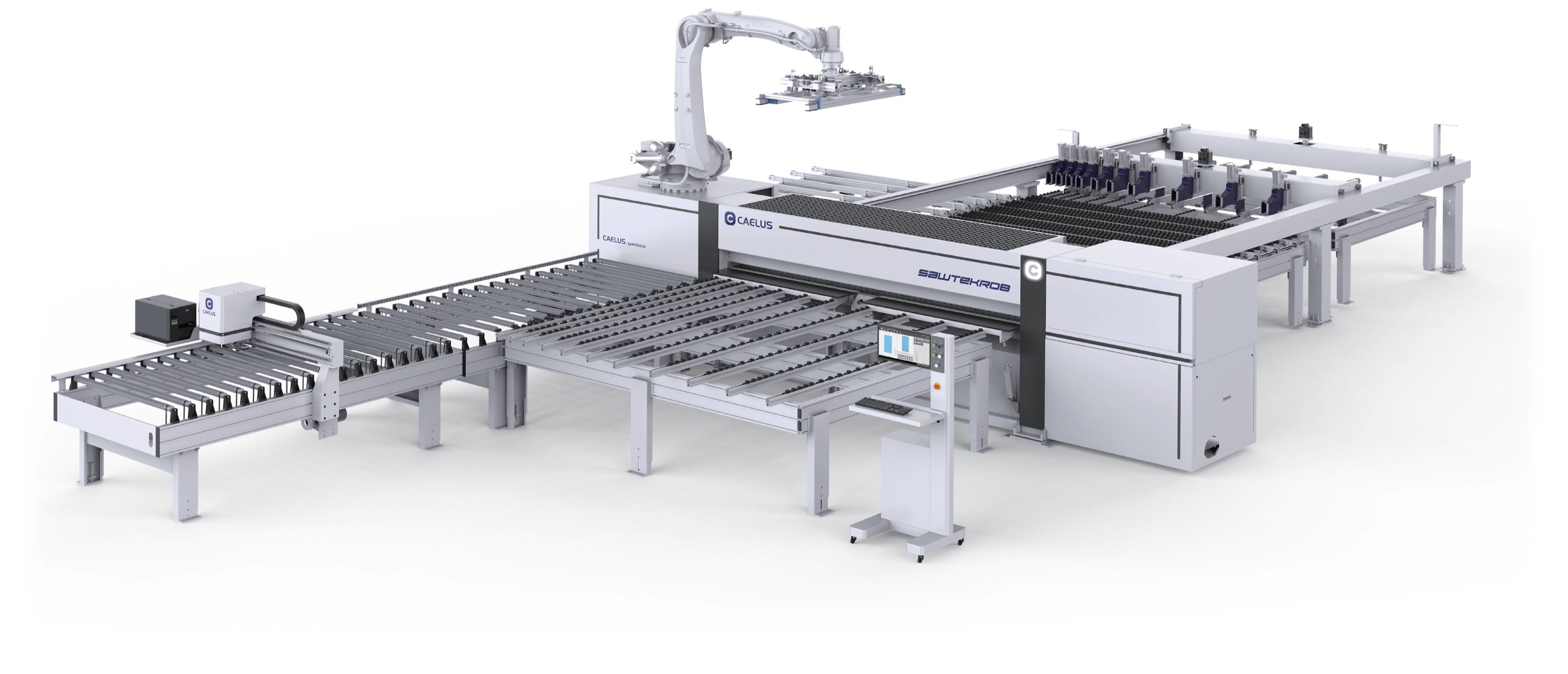
Quick Answer
A CNC panel saw machine does not have one standard price. For a new industrial machine, an initial budget may range from about US$30,000 to more than US$150,000, depending on the machine format, cutting capacity, automation level, loading method, software, and local project costs.
| Planning range | Typical configuration | Often considered by |
|---|---|---|
| Around US$30,000–60,000 | Basic programmable or lower-automation panel cutting solution | Shops moving beyond manual sizing and simple cut lists |
| Around US$60,000–100,000 | Production-grade CNC beam saw with servo positioning, front loading, and cut-list capability | Custom cabinet and furniture factories with regular panel throughput |
| US$100,000–150,000+ | Higher-output CNC panel saw with rear loading or expanded material handling | Factories seeking continuous production and lower manual handling |
Why Published Prices Vary So Widely
A price can look unusually low because it refers to a manual or semi-automatic saw rather than a fully programmable CNC beam saw. It can also exclude options that are essential in a real factory, such as an air-float table, optimization software, labeling, loading equipment, on-site commissioning, or dust extraction.
Before comparing two prices, ask these questions:
- Is the machine manual, semi-automatic, or CNC-controlled?
- Does the quotation include front loading, rear loading, or only the saw itself?
- What are the maximum panel size, cutting thickness, and stack-cutting requirements?
- Are the control system, cut optimization, labeling, and data connection included?
- Does the price include delivery, installation, training, and start-up support?
- Which electrical, compressed-air, dust-collection, and floor-space requirements remain the buyer's responsibility?
A lower purchase price can be the right decision when production volume is modest. It becomes a poor comparison when the lower-cost machine creates a bottleneck, requires extra labor, or cannot support the required material flow.
First, Make Sure You Are Comparing the Same Type of Machine
The term panel saw covers several machine types. Comparing them without separating their automation level can lead to an unrealistic budget.
| Machine type | How material is handled | Best suited to | Cost implication |
|---|---|---|---|
| Sliding table saw | Operator positions and feeds the panel | Low-volume work, prototypes, simple cutting | Lowest initial investment, but higher operator dependence |
| CNC panel saw | CNC control positions the saw or panel for programmed cuts | Factories needing repeatable sizing and digital cut lists | Higher machine investment for lower manual intervention |
| CNC beam saw | Automated clamps, pusher or gripper feed material through a programmed cycle | Regular batch production and stack cutting | Higher cost, typically justified by throughput and consistency |
| Rear-loading CNC system | Material handling is designed for more continuous flow | High-volume production or an automation roadmap | Highest project cost, but less manual loading and waiting time |
A CNC panel saw becomes more relevant when repeatability, faster batch cutting, operator availability, material utilization, and digital production data begin to affect delivery performance.
For a deeper comparison, see CNC Panel Saw vs. Manual Panel Saw and the difference between CNC panel saws and beam saws.
What Drives CNC Panel Saw Machine Cost?
The following factors usually explain most of the difference between two CNC panel saw quotations.
1. Cutting Capacity and Material Requirements
Larger panel formats, greater cutting thickness, stack cutting, dense boards, laminated panels, acrylic, or specialty materials may require a different table size, clamping arrangement, saw package, blade specification, or motor capacity.
Start with the boards you actually process, not the largest capacity available on a brochure. Record your maximum sheet size, usual thickness range, material types, and whether you need to cut multiple sheets in one cycle.
2. Feed System and Loading Method
Manual loading, front loading, rear loading, automatic lifting, buffer modules, and storage connections have different roles in the workflow. Their value is not limited to cutting speed: they can reduce waiting time, panel handling, and the risk of interrupting the saw while operators prepare the next job.
A front-loading machine may fit a flexible custom-furniture workflow. Rear loading or storage integration is more relevant when panel flow must remain continuous across multiple shifts.
3. Drive, Saw Carriage, Clamps, and Scoring
Machine structure and motion components affect how the saw performs under production conditions. Buyers should compare the main saw drive, saw-carriage system, pressure beam, clamp design, scoring capability, and the manufacturer's stated requirements for the intended materials.
For example, a high-density clamp arrangement, stable pressure control, and a suitable scoring setup matter when cut quality and panel movement are concerns, not only when the purchase budget is being reviewed.
4. Software, Optimization, and Labeling
A CNC panel saw can be priced as a stand-alone cutting machine or as part of a connected workflow. Cut optimization, barcode labeling, office-to-machine data transfer, and material management can add to the initial investment, but they may also reduce manual data entry, sorting errors, and avoidable offcuts.
CNC Panel Saw Cost by Production Scenario
A more automated machine is not automatically the better choice. It should remove a real constraint: operator waiting time, inconsistent sizing, material handling, repeated cut-list entry, poor material yield, or limited capacity during peak orders.
| Production situation | Typical priority | Configuration direction |
|---|---|---|
| Low-volume or space-limited shop | Reliable sizing without over-investing | Evaluate a simpler panel saw or entry CNC configuration before adding material handling |
| Custom furniture factory with changing cut lists | Fast changeovers, repeatable dimensions, cut optimization, part identification | Consider a front-loading CNC panel saw with appropriate software and labeling options |
| Continuous panel production | Stable flow, less manual loading, shorter waiting time between jobs | Assess rear loading, buffer capacity, storage connection, and downstream handling as one project |
Low-Volume or Space-Limited Shops
If panels are cut only occasionally, a fully automated CNC beam saw may not be the first investment to make. Review daily cutting demand, available floor space, the number of operators involved, and whether cutting errors or slow sizing are actually delaying delivery.
A smaller operation may gain more from a stable, appropriately sized machine and a disciplined cut-list process than from a high-capacity system that remains underused. The goal is to reduce the cost per finished part, not simply to purchase the most automated machine available.
Custom Furniture Factories With Variable Cut Lists
Cabinet and wardrobe factories often process many sizes, colors, and order quantities in the same week. In this environment, the bottleneck is often not blade speed. It is handling the correct panel, entering accurate cutting data, identifying parts after cutting, and keeping mixed orders moving to edge banding and drilling.
A front-loading CNC panel saw can be a practical fit when operators need flexible access for urgent work or frequent order changes. Prioritize cut optimization, stable positioning, labeling, and simple program management before paying for automation that does not match the workflow.
For more context on matching equipment to production scale, see Types of Beam Saws: CNC, Panel Saw & Automation Guide.
Continuous Panel Production and Automation Lines
When the saw waits for panels, operators spend substantial time loading material, or the cutting cell must run continuously across shifts, the conversation changes from machine price to material flow.
Rear loading, lifting devices, panel buffers, storage systems, and automatic labeling may increase the project budget, but they can also reduce manual handling between batches. These options should be assessed together with downstream capacity. There is little value in accelerating cutting if edge banding, drilling, sorting, or assembly immediately becomes the next constraint.
Is a CNC Panel Saw Worth the Investment?
A CNC panel saw is worth considering when the cost of slow cutting, rework, manual handling, material loss, or missed delivery dates is greater than the cost of improving the process.
Use a simple internal calculation: Annual improvement value = labor savings + reduced material waste + reduced rework + added usable output − added maintenance and operating cost
Then compare that value with: Total investment = machine + selected options + delivery + installation + site preparation + training + software
Do not use a generic payback period from another factory. A shop with mixed custom orders, high panel waste, and limited skilled labor will evaluate the investment differently from a factory producing repeated cabinet parts at stable volume.
Before building an ROI estimate, collect at least four weeks of production data:
| Measure | Why it matters |
|---|---|
| Sheets cut, labor hours, and waiting time | Shows current cutting capacity and handling effort |
| Scrap, re-cuts, and damaged parts | Identifies material and quality losses |
| Order mix and panel sizes | Determines whether flexibility or throughput matters more |
| Downstream waiting time | Shows whether cutting is the real bottleneck |
FAQ
Q1. How much does a CNC panel saw machine cost?
A: New industrial CNC panel saw projects can vary widely. The final budget depends on cutting capacity, automation, loading method, software, options, shipping, installation, and local site requirements. Use published prices only as early planning references and request a configuration-specific quotation.
Q2. Is a CNC panel saw the same as a CNC beam saw?
A: The terms can overlap in the market, but a CNC beam saw usually refers to a more automated panel-sizing machine that uses a programmed feed, pusher, or gripper system. Always compare the actual handling method, capacity, controls, and included options.
Q3. Is rear loading worth the extra cost?
A: Rear loading can be relevant when manual panel handling or machine waiting time limits sustained production. It may not be necessary for a lower-volume factory with flexible, frequently changing work. Evaluate the full material flow before adding it.
Q4. What information affects a CNC panel saw quotation most?
A: Material type, maximum sheet size, cutting thickness, required output, loading method, automation options, software requirements, factory utilities, destination, and installation scope all affect the quotation.
Conclusion
Choosing a CNC Panel Saw Machine is not only about the purchase price. The right budget depends on cutting capacity, automation, loading, software, installation, and the workflow around the saw. Compare like-for-like quotes, measure labor, material waste, rework, and output, then select a configuration that fits your panels, production needs, available space, and future plans. A well-matched CNC panel saw supports more consistent cutting and a more connected furniture-production process.